




Shining a spotlight on Verso Biosense
We speak to Verso Biosense, the pioneering med-tech company at Milton Park, to find out how its in-utero (in the womb) sensing technology could have global implications for women’s health.
The most misunderstood organ?
From endometriosis (where the uterus lining grows outside of the womb) to menopause, uterine health issues are often complex, debilitating and overlooked.
More than a quarter of women in England live with serious fertility issues and many can wait years for diagnosis due to systemic and cultural barriers. Despite the need, women’s health research has been limited due to chronic underfunding and historic biases.
As a result, the womb remains one of medical science’s least understood organs.
Shining a light through data
Tackling the challenge, Verso Biosense, founded in 2015, was born out of research led by obstetrics and gynaecology professors at the University of Southampton.
Their studies revealed embryos are typically cultured in laboratory conditions with 2-5% oxygen, whereas a natural environment is closer to 20% we don’t yet know what the ‘natural’ concentration is for an individual’s womb. This mismatch may be one reason why some IVF cycles fail. From this research, the company was set up to answer a simple question: ‘what if we could directly monitor the conditions in the womb and truly understand its environment?’
This inspired a breakthrough idea: ‘could we engineer an in-uterine device to monitor the womb directly and understand its conditions in real time?’
From questions to innovations
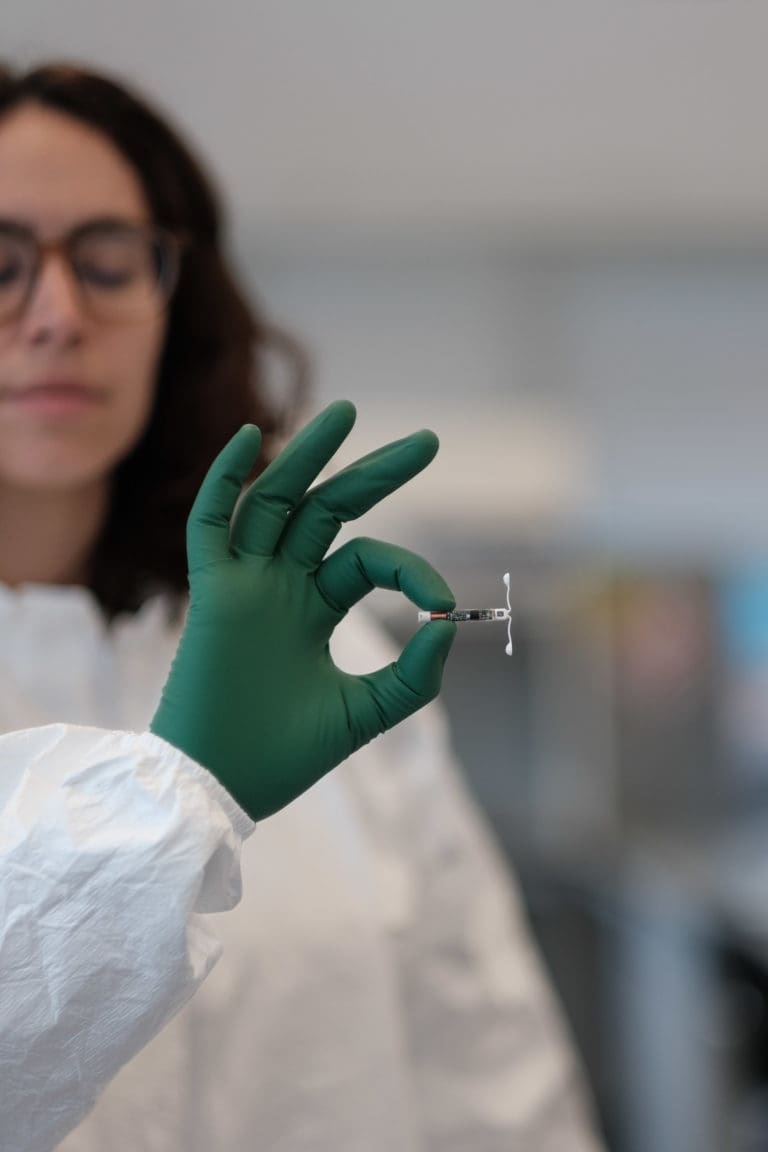
For Verso Biosense, the answer to those questions could lie in IRIS, the company’s first-of-its-kind in-utero sensor, which continuously monitors biomarkers in the uterus.
Similar to an IUD coil, the device sits within the uterus, collecting information such as temperature, pH levels and dissolved oxygen. The device sends data to an app that helps clinicians and researchers better understand uterine health and its broader implications in women’s health.
Kate Rowley, Verso Biosense’s CEO, explains: “People monitor their heart rate and sleep using wearables but no one has been able to monitor the uterus in this way before. We want our devices to give a glimpse into this very poorly understood organ.
“This is the first time we’ve been able to collect data in this way. Whether addressing fertility issues, endometriosis or menopause, we can give women insight to inform their decision-making, so they have more agency over their health and wellbeing.”
Empowering women through data
Now in early clinical trials across the UK, which include partnerships with the University of Southampton and London Women’s Clinic, Verso is in the process of gathering invaluable data from participants.
Kate said: “We want to combine datasets with other health data to uncover insights into conditions like endometriosis or fertility patterns. We are prioritising clinical applications in the first instance through our trials. However, we see this working with non-clinical approaches for health and wellness wearables in the near future.”
The company plans to expand its trials, refine the technology and move towards commercialisation in the next few years. They are also inviting individuals from Milton Park who may wish to take part in upcoming studies or join their scientific advisory board, welcoming interest from like-minded occupiers with expertise in clinical monitoring, power systems, sensors or data science.
Kate continues: “Ultimately, we’re driven by unmet need in women’s health. We want our tech to make a real difference, arming women with the knowledge to inform decisions on their fertility and uterine conditions. We’d love to hear from individuals at Milton Park if they’d like to learn more, take part in our trials or help us on that journey.”
A growing team surrounded by innovators
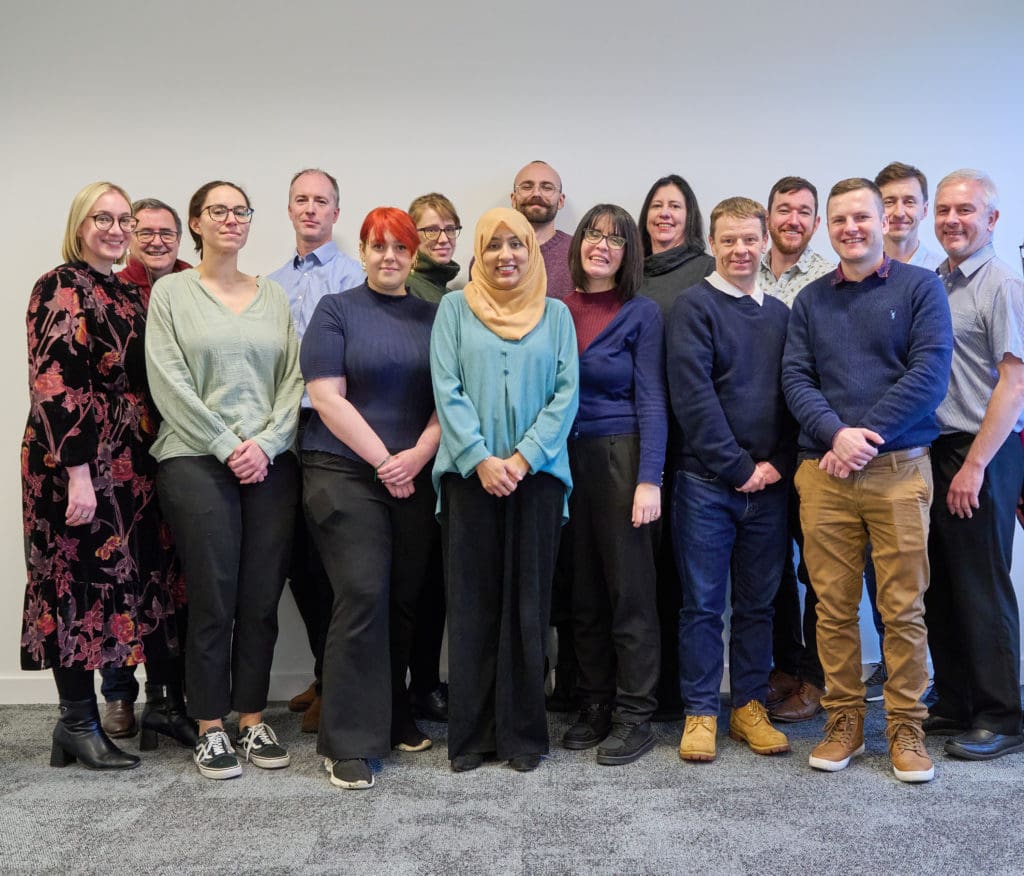
Verso Biosense’s engineers, scientists and clinicians are brought together by a shared goal: to close one of medicine’s biggest knowledge gaps. Having recently welcomed Chris Brown as CTO (formerly of Sharp and Oxford Nanopore) to drive growth, the company is continuing to scale its operations.
For Kate, Milton Park offers the ideal ecosystem for innovation. Situated between its partner study sites in Southampton, Oxford, Birmingham and London, Milton Park is an ideal location for her team to connect with research, investment and healthcare networks.
She said: “I’ve been coming to the Park since 2008 and have always been impressed by the energy and collaboration. Whether in life sciences or tech, it’s a place where ideas can come together in a location that helps us attract the expertise we’ll need to make a real difference.”
A plan for the future
With trials progressing and a vision for commercial rollout from 2027, the company aims to expand its applications beyond fertility into perimenopause and menopause support, combining its data with wider health datasets to advance understanding.
Kate explains: “There are a lot of operators in the market looking at women’s health however no one is measuring the uterus in the way our team is. Using our approach, we have a unique opportunity to use data to improve women’s health across the world. This is just the beginning for us and being part of Milton Park’s community helps us to make that possible.”



Sign up to our newsletter
Subscribe