


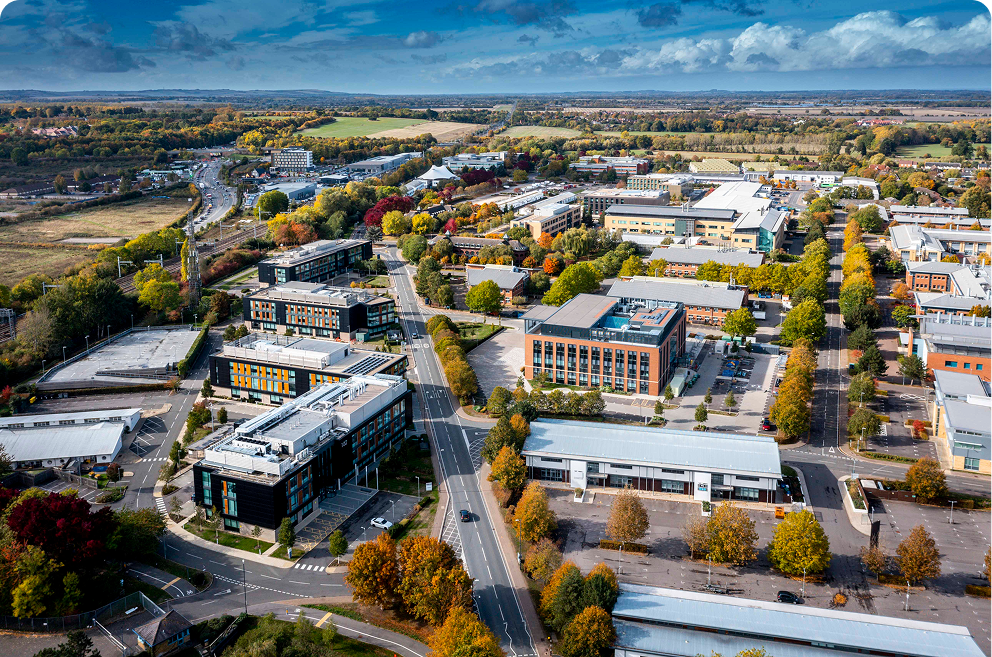
In just one fortnight, five Milton Park companies announced significant successes, including attracting $145m in new equity investment, reaching commercial milestones and dosing the first patient in a first-in-human clinical trial.
Each is an important moment for the company involved. Together, they highlight the growing momentum of UK science and technology, and showcase the breadth of innovative companies that are making their home at Milton Park – from university spinouts to global biotechs.
Investors see the lightInvestors see the light
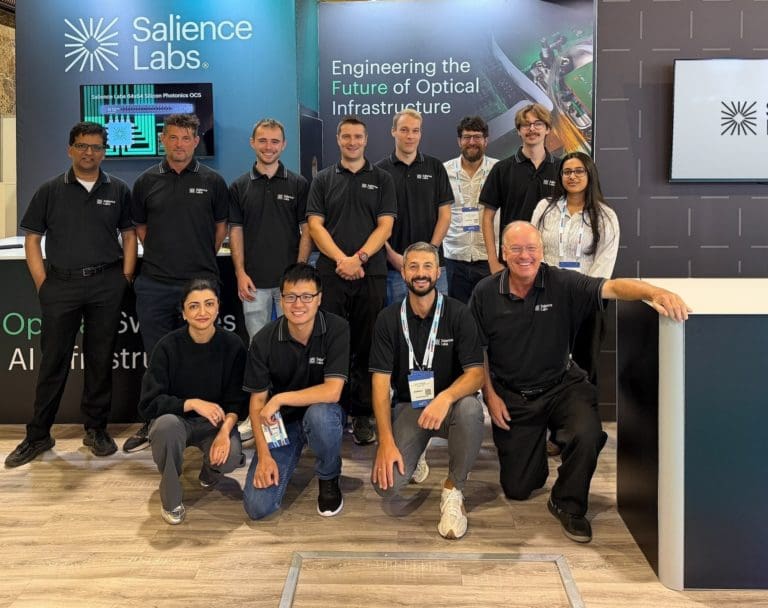
Significant capital investment was secured by two University of Oxford spinouts built on the physics of light, with Salience Labs closing an oversubscribed $125m Series B round and Living Optics securing $20m in funding. Both rounds involved investment from the British Business Bank, the UK Government’s economic development bank, reflecting the Bank’s focus on technologies central to the nation’s industrial strategy.
Modern AI runs on thousands of processors working together, and the speed at which data moves between them is increasingly the limiting factor in computing power. Founded in 2021, Salience Labs’ solution is an optical switch on a single silicon chip, which routes data as light rather than converting it back into electrical signals. The company moved to Milton Park in 2025, which enabled them to more than triple their workspace and ensure they still had room to scale further.
Investors expect that Salience Labs’ chips will form a vital part of the future infrastructure that enables AI technology to scale efficiently, tapping into a potential trillion-dollar market. Led by Bullhound Capital, together with a syndicate of global investors, this funding will allow the company to take its technology forward into high-volume manufacturing.
Living Optics makes hyperspectral cameras that split light into many narrow bands, capturing details that would be invisible to the eye or a conventional camera. The company moved to Milton Park in 2023 following their Series A round to make room for their fast-growing team and they have continued to grow here.
This funding round, led by BRV Capital Management with an international syndicate, will allow Living Optics to scale deployment of their cameras into areas such as industrial inspection, defence, life sciences and environmental monitoring, as well as expanding into new territories.
Computation meets medicine
The two companies reaching recent commercial milestones are both using advanced computation to make drug development faster and more precise.
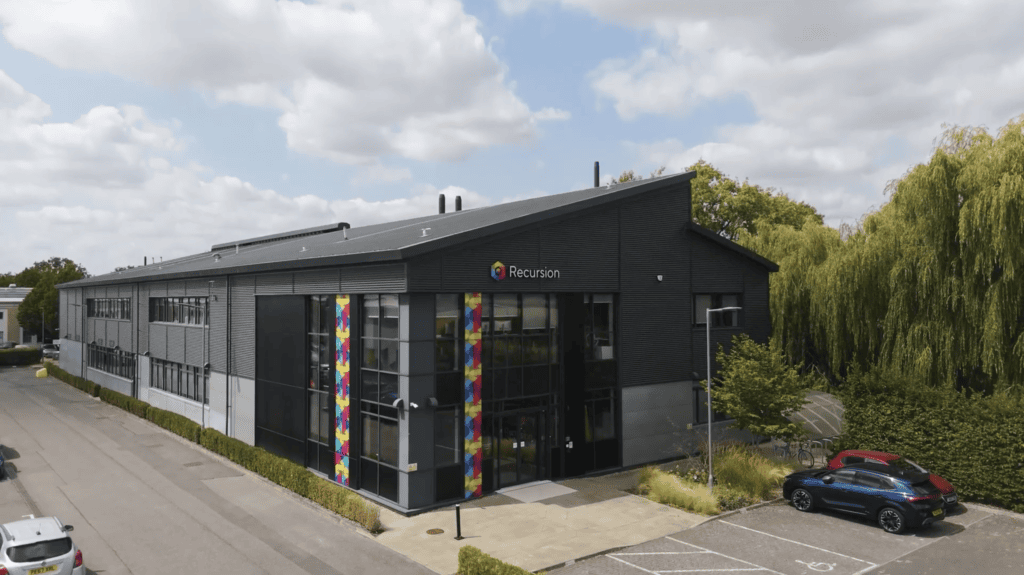
Recursion‘s AI-native drug discovery platform, Recursion OS, combines biology, chemistry and clinical development with purpose-built AI models trained on the company’s own large-scale data – much of it generated in their automated biology and chemistry laboratories at Milton Park.
Pharma giant Sanofi has now optioned the first development candidate from their research collaboration with Recursion. This will be a potential first-in-class oral medicine for inflammatory disease, which is expected to go into Phase 1 clinical trials in 2027.
The milestone triggered a $10m payment to Recursion, bringing total payments from Sanofi to $144m. The collaboration has now reached six milestones across five programmes, with more expected to come over the next year.
Physiomics, based in the Milton Park Innovation Centre, works on a different aspect of the drug development pipeline. They build computational models that predict how a drug will behave in the body and how a tumour might respond, helping drug developers make better decisions before committing to costly clinical trials.
So far Physiomics has worked on more than 140 projects for companies including Merck KGaA, Astellas and Cancer Research UK. Now they’ve announced a new client contract and are entering into discussions with another undisclosed partner to explore new markets and geographic territories for its personalised dosing software.
From lab to patient
As the finale in a packed fortnight of progress, global biotech Immunocore – whose UK headquarters is at Milton Park – announced they have dosed the first patient in the Phase 1 clinical trial of a new drug for type 1 diabetes.
Type 1 diabetes is an autoimmune condition caused by immune cells damaging the insulin-producing cells in the pancreas. The new drug, IMC-S118AI, is built on Immunocore’s novel T cell receptor-based ImmTAX platform. It works by latching onto pancreatic cells and switching off the immune cells attacking them without damping down the immune system as a whole.
Immunocore has been based at Milton Park since 2000, just one year after it was founded, and has expanded several times since then.
Milton Park: space to scale
While the science behind these companies may differ, what links them is the story of how Milton Park provides the setting that lets them scale at pace – whether they’re five years old or 25.
Because the whole estate is under single ownership, with a Local Development Order that simplifies planning to just 10 days, Milton Park can respond quickly when an occupier’s needs change. A wide range of spaces are available to suit all needs, from fitting out new laboratories or expanding into a new office building to reconfiguring space as a company’s research or manufacturing capabilities evolve.
Philip Campbell, Asset Management Director at Milton Park, said:
“In less than two weeks, we’ve seen some major milestones for companies based at Milton Park, from significant capital investment to global deals and clinical milestones. Our job is to make sure that when these companies need to move fast, whether to hire, expand or take on new labs or manufacturing facilities, Milton Park moves with them. It’s a privilege to play our part in supporting the success of UK science and technology, and we’re excited to see what comes next from these companies and the other brilliant innovators working here.”



Sign up to our newsletter
Subscribe