




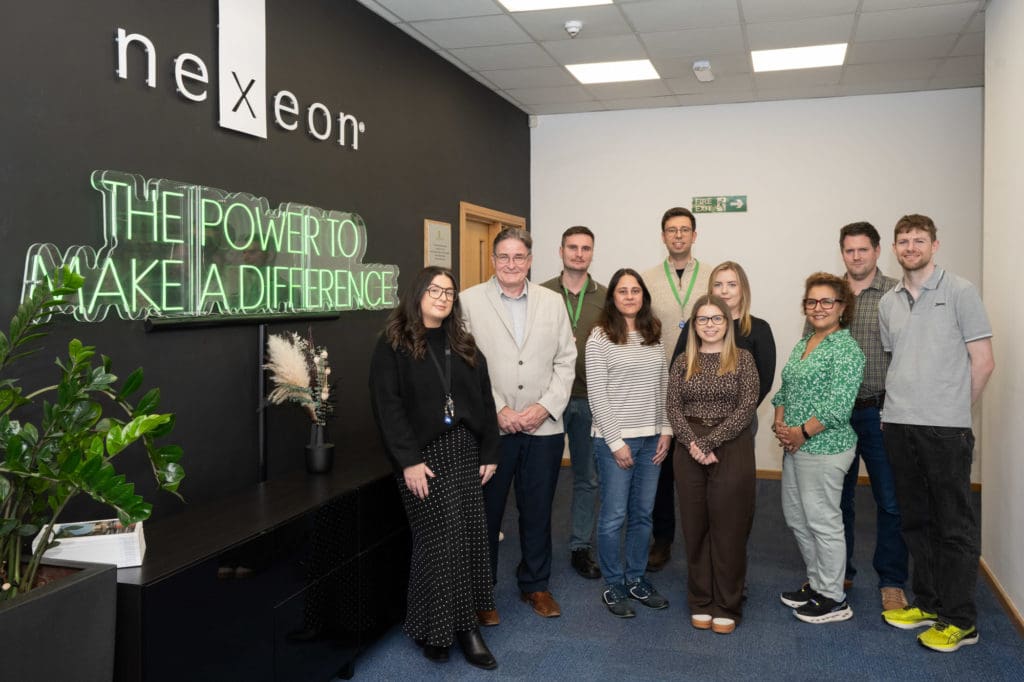
Silicon Battery Valley
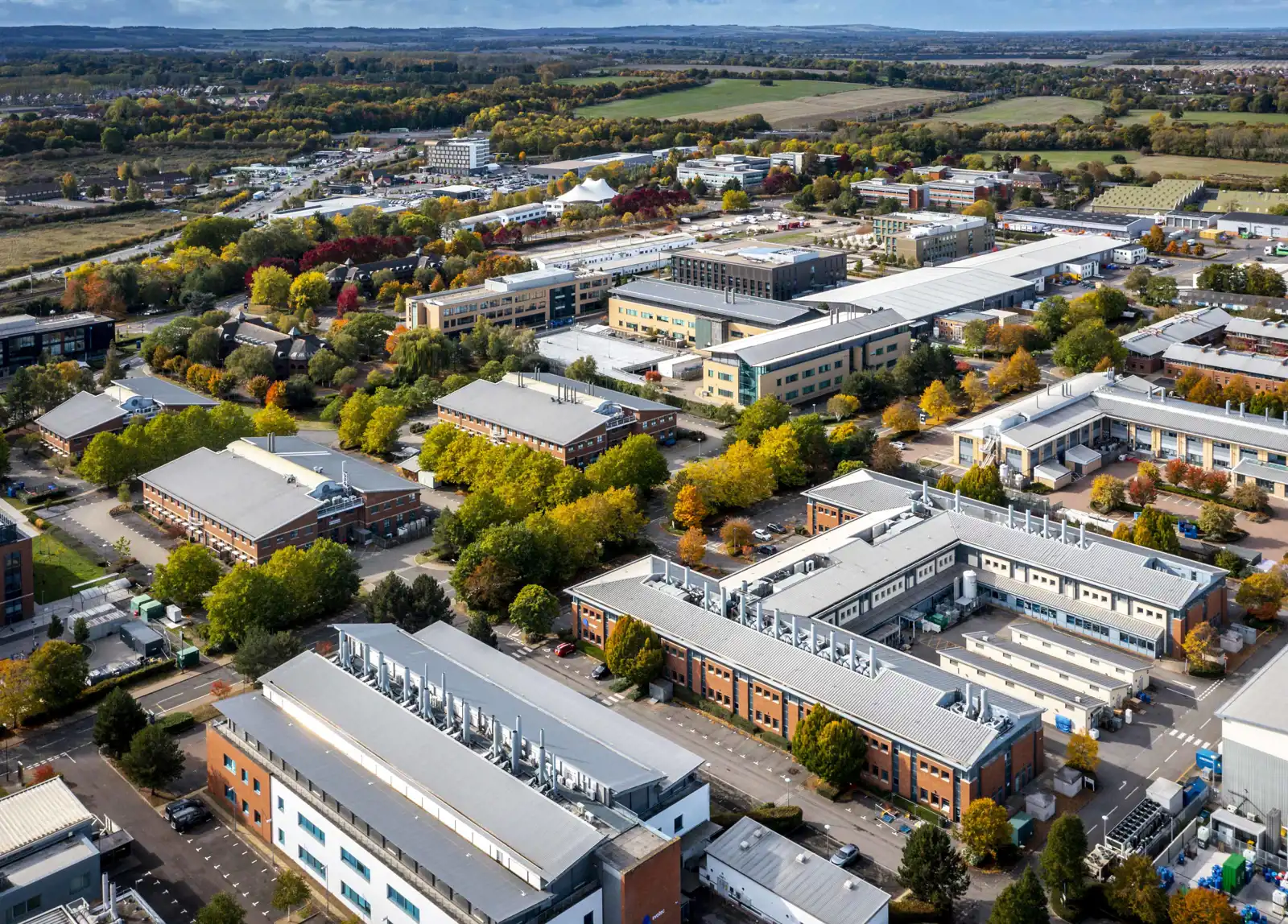
We shine a spotlight on Nexeon, a company pushing the boundaries of battery technology from its Milton Park headquarters, to find out why Oxfordshire is emerging as the UK’s ‘Silicon Battery Valley’.
In the 1980s, Oxford University researcher Professor Goodenough made a groundbreaking discovery that paved the way for the first rechargeable lithium-ion batteries, the technology that now powers smartphones, laptops and electric cars.
Advancing lithium-ion battery technology
Nexeon moved to Milton Park in 2010, as a spinout from Imperial College London, to expand its operations.
Today, the company develops some of the world’s highest-capacity silicon anode materials for lithium-ion batteries (the anode is the part of a battery that stores and releases energy during charging and discharging). These batteries power everything from electric vehicles and consumer electronics to medical devices and energy storage systems.
As an alternative to graphite anodes, the use of silicon enables batteries to charge faster and last longer than traditional alternatives. From its Milton Park headquarters, Nexeon is on a mission to create lighter, higher-energy battery cells with faster charge times, technology which could power the electric vehicles of the future and transform the way the world stores and uses energy.
Pioneering new battery materials
“Traditional batteries use graphite in the anode, the part which releases electrons during discharge to create a current,” explains Tesh Devprasad, Nexeon’s Head of Operations.
“It’s a reliable method but graphite is reaching its limits in how far it can take electric vehicles, both in range and how quickly they can charge. Instead, we’re developing silicon anodes which can unlock higher energy densities, meaning batteries can last longer, charge faster, operate safely and be more cost-effective.”
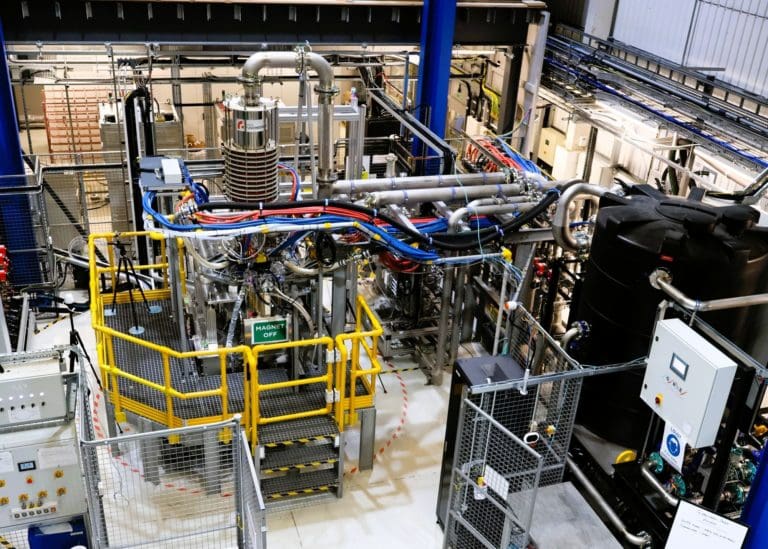
Tesh leads Nexeon’s advanced manufacturing pilot facility, bringing together the company’s R&D, process development and testing teams under one roof.
Tesh explains: “Our plant takes new ‘recipes’ (precise material formulations and processes developed in the lab), proves them at scale and then ships next-generation samples to prospective customers. That seamless loop between R&D, pilot and commercial teams means we can quickly refine and adapt to suit market needs.”
Attracting a global workforce
With nearly 100 people from over 20 nationalities, Nexeon has grown rapidly in recent years, expanding across engineering, quality, procurement, HR and finance.
Grant Apsey, Head of Chemical Process Development, works closely with Nexeon’s materials scientists to scale up laboratory discoveries into manufacturing processes that can produce battery materials in commercial quantities. Grant notes, “We’re developing new processes which need precise environmental control. Our headquarters are designed to be collaborative, with lab technicians creating small-scale materials and our engineers building the equipment to scale them up.”
Grant adds: “Milton Park being under single-ownership gives us the freedom to adapt as we grow. As our technology advances and new investment comes in, we’ve been able to reconfigure labs, remove redundant kit and expand our facilities.”
Recharging the team’s batteries
Grant comments: “Being based here gives us access to talent on our doorstep, whether that’s university collaborators or neighbouring engineering companies. Ernesto Vago, Head of Quality, adds: “Oxfordshire has a unique spirit of collaboration. It’s inspiring to help write the next chapter of battery technology where the story first began, with Professor Goodenough and his work at Oxford University.”
Ernesto Vago adds “The Park does feel like a giant incubator. It has strong transport links, cafés, green spaces and gyms, not to mention the upcoming Signal Yard amenities, all of which help to build a community of likeminded companies. For a company scaling next-generation battery materials, it really is the perfect mix.”
Grant says, “We always make the most of the subsidised Milton Park bus pass and the rail connections into Didcot. You’ll see us having walking meetings around the Park’s green space. Striking a balance between amenities, facilities, infrastructure and a pleasant setting is really important.”
Future implications
Reflecting on the company’s vision to bring its batteries into everyday life, Ernesto says: “For me, success would be pointing to my own car and saying the battery uses Nexeon’s material.”
Grant adds: “Our material can go into any battery size. We don’t see ourselves outgrowing Milton Park or the demand for batteries fading, we see our technology broadening where and how batteries perform.”
Looking at the bigger picture, Ernesto concludes: “I hope Oxfordshire becomes synonymous with battery technology excellence and that we’ve played a part in making silicon anodes a mainstream reality. That’s a legacy I’d be proud of.”


Sign up to our newsletter
Subscribe